
New dates to be announced shortly, the RBI said.

However, he maintains, that even global factors too are responsible.

The tenure of the committee will be for two years up to June 30, 2011, the central bank said. The panel will review the monetary developments in the country keeping in mind the macroeconomic scenario and will advise the banking regulator on the stance of monetary policy due on July 28.

"Policy sales will be one of the focus areas for the company because looking at the large insurance gap, large number of people being uncovered. The only right way to go is to increase the number of policies," said Amit Jhingran, MD & CEO, SBI Life Insurance.

The Reserve Bank of India (RBI) Governor Sanjay Malhotra is now confronting the classic growth-inflation tradeoff, a situation exacerbated by the West Asia war, which threatens to end the 'goldilocks period' of low inflation and robust growth.

The Indian rupee rebounded 50 paise from its all-time closing low to settle at 96.36 against the US dollar, driven by retreating crude oil prices, signs of easing geopolitical friction, and likely central bank intervention.

Subbarao's annual statement will be of unusual interest this year

These are the highlights of the seventh bi-monthly monetary policy statement for 2019-20 by the RBI amid COVID-19 pandemic:

Food inflation has touched a 10-year-high of 19.95 per cent and the inflation rate based on the Wholesale Price Index, which was estimated at 4.78 per cent, is expected to cross 6 per cent by the end of the month.
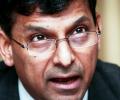
The central bank kept cash reserve ratio unchanged at 4 per cent.

Highlights of RBI's third quarter review of monetary policy.
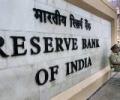
The Reserve Bank of India on Friday said it will come out with its annual monetary policy for the next fiscal on April 20, amid expectations that the central bank will hike interest rates to tame the rising inflation
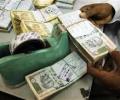
Inflows from Europe, falling crude oil to come to the rescue if rupee cracks against the dollar.

State Bank of India Chairman C S Setty has expressed support for a 'pause' in policy rates by the Reserve Bank of India's monetary policy committee, believing it will help stabilise conditions and support economic growth. He also urged investors to look beyond short-term equity market movements and focus on India's structural transformation, driven by reforms and digital infrastructure.

Bank of Baroda economists project India's GDP to grow 6.5-6.8 per cent in FY27 but warn that the fiscal deficit could overshoot the budgeted 4.3 per cent target, potentially reaching 4.7-4.8 per cent of GDP due to subsidy overruns, excise duty cuts, and oil marketing company losses.

Reserve Bank of India (RBI) Governor Sanjay Malhotra stated that recent regulatory measures to address foreign exchange market volatility, such as capping banks' net open positions, are temporary and aligned with current market conditions, not signalling any structural shift in policy.
The chances of ending the current fiscal year at anywhere near the 5.5 per cent that RBI officially targets seem bleak indeed.

Reducing policy rates is not enough. The key is to ensure banks lend to credit-constrained borrowers.

The Lok Sabha elections in 2024 are not a consideration when it comes to monetary policymaking, said Reserve Bank of India governor Shaktikanta Das to underscore the central bank's commitment to controlling inflation. "It's not possible for me to comment what we do in the next MPC (Monetary Policy Committee), but one thing I can tell and I would like to make it very clear-that the fact of elections coming up in 2024 is not a factor at all so far as monetary policymaking is concerned. "Monetary policymaking is for checking (and) controlling inflation," Das said at the Business Standard, BFSI Insight Summit.

From the Sensex pack, Power Grid, Mahindra & Mahindra, JSW Steel, HCL Technologies, Sun Pharma, Nestle, IndusInd Bank, Reliance Industries, Bharti Airtel and ITC were the major laggards. Tech Mahindra, Wipro, Bajaj Finance, State Bank of India, Bajaj Finserv, Axis Bank, Titan and ICICI Bank were among the major gainers.

Next bi-monthly policy statement on September 30.


While the RBI, in the recent past, appeared keen to move to an inflation-targeting framework, industry and academia remain divided on this issue.
This time the all-powerful interest-rate setting panel, whose constitution was notified by the government on Thursday, will take call on interest rate. But that's not the only change. The Reserve Bank of India has also decided to change the timing of announcement of its policy review, due next Tuesday, to mid-afternoon.

Short-term lending rate unchanged at 7.75 pc.

The central bank raised statutory liquidity ratio, the portion of deposits that banks are required to keep in government securities, by 100 basis points to 25 per cent. Other key rates were unchanged.

The United Nations has revised downward India's economic growth forecast for 2026 to 6.4 per cent from an earlier 6.6 per cent, attributing the change to global uncertainties and economic shocks stemming from the ongoing West Asia crisis.

The apex bank hiked its repo, reverse repo (overnight lending and borrowing rates) to 5.25 per cent and 3.75 per cent, respectively, while the cash reserve ratio, or the portion of deposits banks park with RBI, to 6 per cent in line with analysts' expectations.

The highlights of the RBI's fourth monetary policy review of fiscal year 2022-23 announced by Governor Shaktikanta Das.

Amid expectations that the Reserve Bank may keep its monetary stance unchanged, the central bank will come out with its second quarter review of the credit policy for the current fiscal on October 27.
The Reserve Bank has reduced interest rate by 150 bps since January 2015.

The Indian rupee saw a significant appreciation against the US dollar following President Trump's suspension of military strikes against Iran and the Reserve Bank of India's decision to maintain its key interest rate. Market sentiment was further buoyed by positive comments from the RBI regarding the health of the banking sector.

'If the war continue for a longer period of time, it is just a matter of time before the government will pass on some of the price increases.'

Inflation to peak in the current quarter within tolerance band, moderating in the second half of next fiscal, says central bank.
Supporting Reserve Bank's hawkish stance on monetary policy, Finance Minister Pranab Mukherjee on Tuesday said the increase in the key rates was necessary to contain inflation.

Nomura has increased its March 2027 target for the Nifty 50 to 25,900, driven by strong corporate earnings and attractive market valuations, even as risks from the West Asia conflict and high oil prices persist.

Patra, as executive director of the central bank, was the principal advisor to the Monetary Policy Department since July 2012.

Crude oil prices surged over 3% in futures trade after US President Donald Trump expressed doubts about the Iran ceasefire, reigniting fears of supply disruptions from West Asia and pushing Brent crude above USD 107 per barrel.
Let's wait for the monetary policy on February 8 -- to see how it complements the fiscal commitments, points out Tamal Bandyopadhyay.

Baby steps are pleasing to see, but when it comes to policy-making, one has to see where they go. Policy statements rarely provide the specific rationale for the proposed "baby steps". Economists, who see "baby steps" as "interest rate smoothening", infer a rationale for such actions in a variety of ways, as for example from the minutes of the policy meetings where they are made available.
 © 2026 Rediff.com - Advertise with us - Disclaimer - Privacy Policy - Sitemap - Feedback - About us - Terms of use - Grievances